
• Contact
  • 888-54-FIRST
  • Client Login
    • Client Portal
    • Online Store
Search
First Healthcare Compliance
  • Solutions
    • Compliance Management Software
    • Online Compliance Courses
    • Compliance Management Suite
  • Plans
  • Resources
    • Blog
    • Virtual Education Hub
    • 1st Talk Compliance Podcast
    • Connect Magazine
    • Compliance Posters
    • Healthcare Compliance Books
    • Newsletter Signup
  • News & Events
    • Press Releases
  • Our Team
  • Request Demo
  • Menu Menu
  • Shopping Cart Shopping Cart
    0Shopping Cart

Blog

anti-discrimination laws

EEOC Files Landmark Lawsuit for LGBT Employees

April 14, 2016/in Blog, Human Resources

Federal anti-discrimination laws are an evolving beast and the Equal Employer Opportunity Commission (EEOC), the agency charged with enforcing these laws, has made it a priority in recent years to ensure that the law evolves to include protections for lesbian, gay, bisexual, and transgender (LGBT) individuals.

Currently, under the main federal anti-discrimination law affecting employers with 15 or more employees, Title VII of the Civil Rights Act, employees are afforded protections from discrimination on the basis of race, color, religion, sex, and national origin (referred to as the protected classes). Discrimination and harassment based on any of these protected classes is prohibited by law. Title VII includes discrimination based on gender, gender stereotyping, pregnancy, and sexual harassment as forms of sex discrimination. But the EEOC takes a broader view, having concluded that discrimination on the basis of sexual orientation is another form of sex discrimination. (For more information click here.)  In addition, many states have followed suit by defining sexual orientation as a protected class. But federal Title VII has yet to explicitly include such protections.

On March 1, 2016, in an effort to standardize the law on this matter, the EEOC filed its first two sex discrimination lawsuits based on sexual orientation in federal court according to a recent press release:

  • EEOC v. Scott Medical Health Center, P.C.— The EEOC sued Scott Medical Health Center, P.C., a provider of pain management and weight loss services, alleging that it discriminated against employee David Baxley on the basis of sex when it subjected him to harassment because of his sexual orientation and/or because he did not conform to the employer’s gender-based stereotypes. According to the lawsuit, Baxley’s immediate supervisor knew that Baxley was gay and frequently assailed him with highly offensive anti-gay epithets, and other vulgar epithets based on sex stereotypes. When Baxley complained about the harassment to the medical director, the medical director took no corrective action, resulting in his constructive discharge.
  • EEOC v. IFCO Systems NA, Inc. — The EEOC sued IFCO, a provider of reusable plastic containers, alleging that it discriminated against employee Yolanda Boone on the basis of sex by terminating her for complaining about harassment. The lawsuit alleges that Boone’s supervisor harassed her repeatedly because of her status as a lesbian woman, which included sexually suggestive gestures. The EEOC alleges that Boone was retaliated against because she was terminated days after she complained to management and via the employee hotline.

In filing these lawsuits, the federal court will have to determine if sexual orientation discrimination is a type of sex discrimination. Depending on the outcome of these cases, it may be the first of many lawsuits to come. So what impact does this have on the healthcare provider? First and foremost, providers need to have a written policy against discrimination and harassment in the workplace based on the federal anti-discrimination laws and applicable state law(s). Providers should incorporate policies that prohibit discrimination based on sexual orientation and gender identity, even if such discrimination is not recognized by state law, due to the changing legal landscape. Written policies should be followed by proper training so that employees understand their rights and responsibilities.  Having a zero tolerance for discrimination promotes a healthy work culture, decreases work disruptions, and avoids the provider ending up in court opposite the EEOC.


Register for our upcoming webinar titled ‘Bulletproof Technique to Prevent Hostility at Your Workplace’ on April 21st at 12pm EST, presented by Yvette Durazo of Unitive Consulting.

In the coming months, 1STHCC will be adding a new suite of training videos, which will include federal discrimination, harassment, and sexual harassment employee training.
Tags: discrimination, EEOC, Equal Employer Opportunity Commision, Federal anti-discrimination laws, harassment, IFCO Systems NA, LGBT, retaliation, Scott Medical Health Center, Sexual Orientation, Title VII of the Civil Rights Act
Share this
  • Share on Facebook
  • Share on X
  • Share on LinkedIn
  • Share on Reddit
  • Share by Mail
https://1sthcc.com/wp-content/uploads/2016/04/iStock_000049675826_Full-scaled.jpg 1707 2560 Catherine Short https://1sthcc.com/wp-content/uploads/2022/10/1sthcc-logo-1024x378.jpg Catherine Short2016-04-14 11:00:002025-04-15 12:58:02EEOC Files Landmark Lawsuit for LGBT Employees
You might also like
9 Recommendations for Title VI Compliance During COVID-19 Infographic: 9 Recommendations for Title VI Compliance During COVID-19
Workplace Discrimination Statistics FY2017
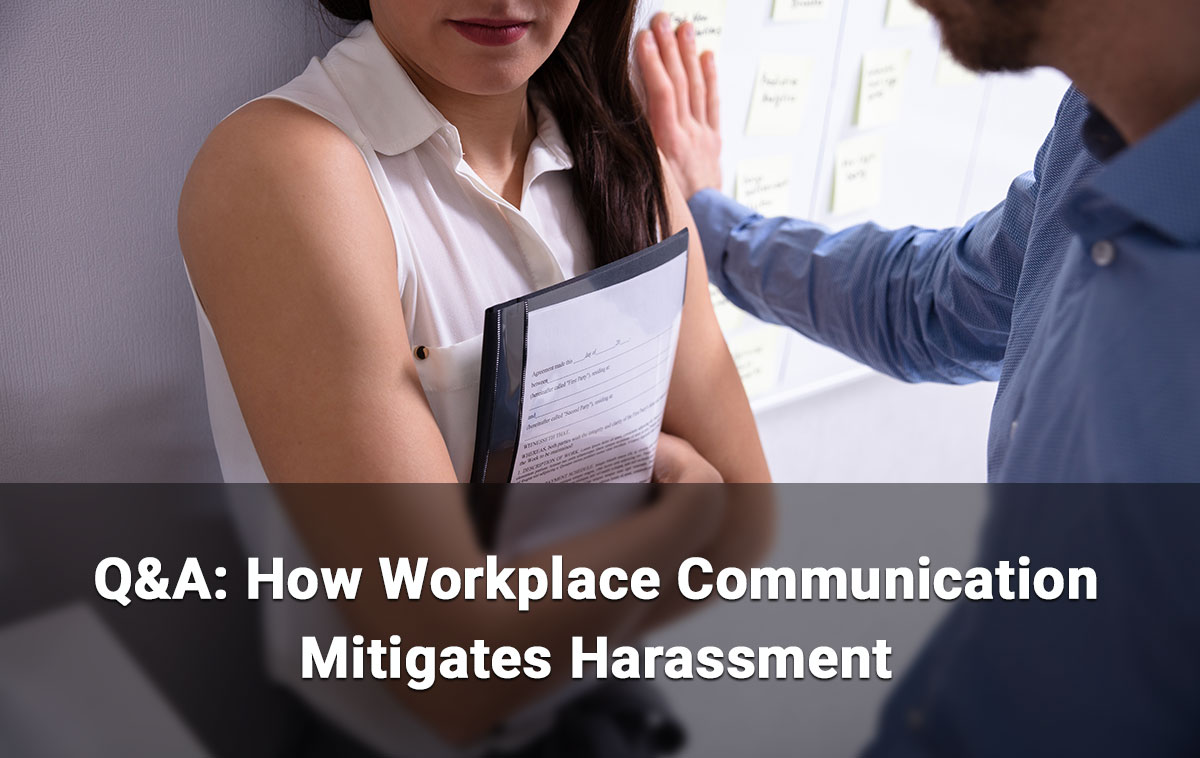
Workplace Harassment Healthcare Human Resources Q&A: How Workplace Communication Mitigates Harassment
Infographic: Healthcare Compliance Training for the Workforce
Discrimination EEOC Roundup: Cases Against Healthcare Providers
Common Mistakes and Pitfalls When Addressing Pregnancy Discrimination in the Workplace Let’s Talk About Sex, Baby: Common Mistakes and Pitfalls When Addressing Sex and Pregnancy Discrimination in the Workplace

Subscribe to Weekly eNewsletter

Get the latest healthcare compliance updates straight to your inbox.

Subscribe to Newsletter

Recent Posts

  • OSHA Recordkeeping in Healthcare: Answers to Frequently Asked Questions
  • Naughty or Nice? The Rules of Giving and Receiving in Healthcare
  • fraud waste abuse healthcare compliance
    FWA in Healthcare: How to Respond Appropriately to Detected Offenses
  • Infographic: 6 Areas of Potential Liability for Healthcare Providers
    6 Areas of Potential Liability for Healthcare Providers
  • 5 Benefits of Automating Incident Reporting in Healthcare
  • Compliance Primer Series: Fraud, Waste and Abuse


First Healthcare Compliance is a division of Panacea Healthcare Solutions. Learn more

Subscribe

Get the latest healthcare compliance updates straight to your inbox.

Subscribe to Newsletter

Connect

Get started: Request Demo

Call: 1-888-54-FIRST

E-mail: Contact us

  • Link to Instagram
  • Link to Youtube
  • Link to Facebook
  • Link to LinkedIn
  • Link to X
© Copyright 2026 Panacea Healthcare Solutions, LLC | Disclaimer | Privacy Policy and Copyright Notice
Scroll to top Scroll to top Scroll to top

We and our third-party partners use cookies to improve and personalize your experience on the site and with our services in addition to delivering and reporting on ads. Please visit our Privacy Statement for more information. By continuing to browse the site, you are agreeing to our use of cookies. Read Privacy Statement.

OKDismiss

Cookie and Privacy Settings


How we use cookies

We may request cookies to be set on your device. We use cookies to let us know when you visit our websites, how you interact with us, to enrich your user experience, and to customize your relationship with our website.

Click on the different category headings to find out more. You can also change some of your preferences. Note that blocking some types of cookies may impact your experience on our websites and the services we are able to offer.

Essential Website Cookies

These cookies are strictly necessary to provide you with services available through our website and to use some of its features.

Because these cookies are strictly necessary to deliver the website, refusing them will have impact how our site functions. You always can block or delete cookies by changing your browser settings and force blocking all cookies on this website. But this will always prompt you to accept/refuse cookies when revisiting our site.

We fully respect if you want to refuse cookies but to avoid asking you again and again kindly allow us to store a cookie for that. You are free to opt out any time or opt in for other cookies to get a better experience. If you refuse cookies we will remove all set cookies in our domain.

We provide you with a list of stored cookies on your computer in our domain so you can check what we stored. Due to security reasons we are not able to show or modify cookies from other domains. You can check these in your browser security settings.

Other external services

We also use different external services like Google Webfonts, Google Maps, and external Video providers. Since these providers may collect personal data like your IP address we allow you to block them here. Please be aware that this might heavily reduce the functionality and appearance of our site. Changes will take effect once you reload the page.

Google Webfont Settings:

Google Map Settings:

Google reCaptcha Settings:

Vimeo and Youtube video embeds:

Privacy Policy

You can read about our cookies and privacy settings in detail on our Privacy Policy Page.

Privacy Policy and Copyright Notice
Accept settingsHide notification only