• Contact
  • 888-54-FIRST
  • Client Login
    • Client Portal
    • Online Store
Search
First Healthcare Compliance
  • Solutions
    • Compliance Management Software
    • Online Compliance Courses
    • Compliance Management Suite
  • Plans
  • Resources
    • Blog
    • Virtual Education Hub
    • 1st Talk Compliance Podcast
    • Connect Magazine
    • Compliance Posters
    • Healthcare Compliance Books
    • Newsletter Signup
  • News & Events
    • Press Releases
  • Our Team
  • Request Demo
  • Menu Menu
  • Shopping Cart Shopping Cart
    0Shopping Cart

Blog

medical trash disposal

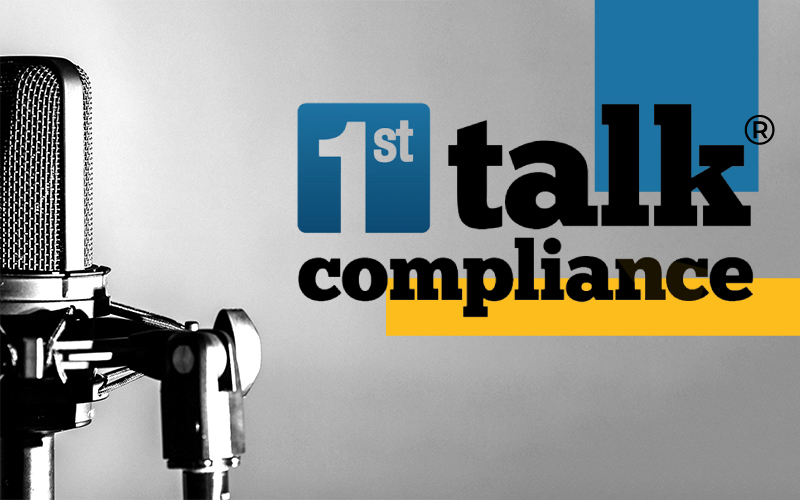
Let’s Talk Trash

June 8, 2016/in Blog, OCR, OSHA

Do you ever have trouble figuring out which trash can to use when throwing something away? Even a simple cardboard coffee cup with a plastic lid may give you pause while trying to choose the best option. Now, you may be confronted with a myriad of sorting choices: paper, aluminum, plastic, paper, glass, all recyclables or regular trash. Fortunately, your use of public receptacles is unlikely to cause direct harm to individuals; the harm is much more likely indirect, measured by the sustainability of the environment.  However, in a healthcare facility the potential for direct harm to individuals does exist.  Every employee must be aware of the significance of medical trash disposal. The proper receptacle choice is the key to avoiding any potential harm to another healthcare worker inside or outside of the facility, a member of the waste management or document shredding workforce, a visitor to the facility or to an individual seeking care.

Direct harm to individuals could manifest in a variety of ways. The possibility of physical harm is obvious if sharps boxes or containers are not used for all needles, scalpels, or other sharps, significantly increasing the risk for an unsuspecting member of janitorial services or waste management. In a similar manner, the risk of spreading infection by bloodborne pathogens or other potentially infectious materials must be avoided by using the biohazard red bags for all materials contaminated with blood such as gloves, gowns, covers or tubing.  A few notable exceptions to the mandatory placement of blood-soaked materials into biohazard containers are common household products with significant absorbency such as Band-Aids or feminine hygiene products. In addition to these household products, non-contaminated materials such as gloves or exam table paper should be placed in regular trash.

A less obvious but equally as devastating harm to an individual involves the security of their protected health information(PHI).  Any papers or other media containing PHI that are tossed into regular trash constitute unsecure PHI and could likely cause a breach.  Medical identity theft is on the rise and steps must be taken to avoid such a costly scenario.  A locked trash receptacle should be used prior to shredding of any documents with PHI.  Appropriate safeguards should be in place for the proper disposal of electronic media to prevent breach of electronic PHI (ePHI).

Standardized features of container choices in health care facilities help with the accuracy and speed of the sorting process.   In order for the process to successfully reduce risk, all of the employees need to be trained on the “Do’s and Don’ts” of trash disposal.  Sharps containers are hard plastic to prevent puncture through the container walls and have a drop-in system to reduce risk of injury from existing contents. It is necessary for those employees who deal with sharps disposal to understand how to safely dispose of a sharp, how to recognize the maximum capacity of the container to prevent overfilling and how to obtain an empty sharps container.  Employees should never empty a Sharps container.  All employees must understand the significance of biohazard bags and what they should and should not be used for.  In addition to the common household products with significant blood absorbency, red bags should never be used for chemotherapy waste which should only be placed in a chemo approved container. Locking mechanisms should always be used to prevent unauthorized access to any receptacle containing PHI such as those awaiting shredding.

Many agencies oversee regular trash and regulated waste disposal from healthcare facilities but only a few are federal agencies. Any HIPAA Privacy issues regarding unsecure PHI would fall under the Office of Civil Rights (OCR).  Other than OSHA-regulated disposal of infectious waste and the Department of Transportation, the regulations for regulated medical waste disposal are generally on the state level and vary significantly.
Tags: bbp, blood borne pathogens, medical waste, needles, PHI, sharps, trash, trash disposal, waste disposal
Share this
  • Share on Facebook
  • Share on X
  • Share on LinkedIn
  • Share on Reddit
  • Share by Mail
https://1sthcc.com/wp-content/uploads/2016/06/Talk-Trash-scaled.jpg 1600 2560 First Healthcare Compliance Staff https://1sthcc.com/wp-content/uploads/2022/10/1sthcc-logo-1024x378.jpg First Healthcare Compliance Staff2016-06-08 14:00:102025-04-15 12:58:01Let’s Talk Trash
You might also like
Medical waste Do’s and Don’ts of Medical Waste
Vendor Management Data Breach Q&A: Vendor Management In Healthcare: The High Cost of Failing to Triage Your Vendors
Business Associate Don’t Be Unprepared for a Breach by a Business Associate
Document Retention and Destruction Document Retention & Destruction: Audio Version of Webinar
Happy 25th Anniversary HIPAA! HIPAA Celebrates 25 Years – A Synopsis of the Law’s Evolution
bloodborne pathogen Webinar Q&A: OSHA- Bloodborne Pathogen and Hazard Communication Training

Subscribe to Weekly eNewsletter

Get the latest healthcare compliance updates straight to your inbox.

Subscribe to Newsletter

Recent Posts

  • OSHA Recordkeeping in Healthcare: Answers to Frequently Asked Questions
  • Naughty or Nice? The Rules of Giving and Receiving in Healthcare
  • fraud waste abuse healthcare compliance
    FWA in Healthcare: How to Respond Appropriately to Detected Offenses
  • Infographic: 6 Areas of Potential Liability for Healthcare Providers
    6 Areas of Potential Liability for Healthcare Providers
  • 5 Benefits of Automating Incident Reporting in Healthcare
  • Compliance Primer Series: Fraud, Waste and Abuse


First Healthcare Compliance is a division of Panacea Healthcare Solutions. Learn more

Subscribe

Get the latest healthcare compliance updates straight to your inbox.

Subscribe to Newsletter

Connect

Get started: Request Demo

Call: 1-888-54-FIRST

E-mail: Contact us

  • Link to Instagram
  • Link to Youtube
  • Link to Facebook
  • Link to LinkedIn
  • Link to X
© Copyright 2026 Panacea Healthcare Solutions, LLC | Disclaimer | Privacy Policy and Copyright Notice
Scroll to top Scroll to top Scroll to top

We and our third-party partners use cookies to improve and personalize your experience on the site and with our services in addition to delivering and reporting on ads. Please visit our Privacy Statement for more information. By continuing to browse the site, you are agreeing to our use of cookies. Read Privacy Statement.

OKDismiss

Cookie and Privacy Settings


How we use cookies

We may request cookies to be set on your device. We use cookies to let us know when you visit our websites, how you interact with us, to enrich your user experience, and to customize your relationship with our website.

Click on the different category headings to find out more. You can also change some of your preferences. Note that blocking some types of cookies may impact your experience on our websites and the services we are able to offer.

Essential Website Cookies

These cookies are strictly necessary to provide you with services available through our website and to use some of its features.

Because these cookies are strictly necessary to deliver the website, refusing them will have impact how our site functions. You always can block or delete cookies by changing your browser settings and force blocking all cookies on this website. But this will always prompt you to accept/refuse cookies when revisiting our site.

We fully respect if you want to refuse cookies but to avoid asking you again and again kindly allow us to store a cookie for that. You are free to opt out any time or opt in for other cookies to get a better experience. If you refuse cookies we will remove all set cookies in our domain.

We provide you with a list of stored cookies on your computer in our domain so you can check what we stored. Due to security reasons we are not able to show or modify cookies from other domains. You can check these in your browser security settings.

Other external services

We also use different external services like Google Webfonts, Google Maps, and external Video providers. Since these providers may collect personal data like your IP address we allow you to block them here. Please be aware that this might heavily reduce the functionality and appearance of our site. Changes will take effect once you reload the page.

Google Webfont Settings:

Google Map Settings:

Google reCaptcha Settings:

Vimeo and Youtube video embeds:

Privacy Policy

You can read about our cookies and privacy settings in detail on our Privacy Policy Page.

Privacy Policy and Copyright Notice
Accept settingsHide notification only